.svg)
Zack Cooper testifies on rising health care spending before the Texas Select Committee on Health Care Affordability
.webp)
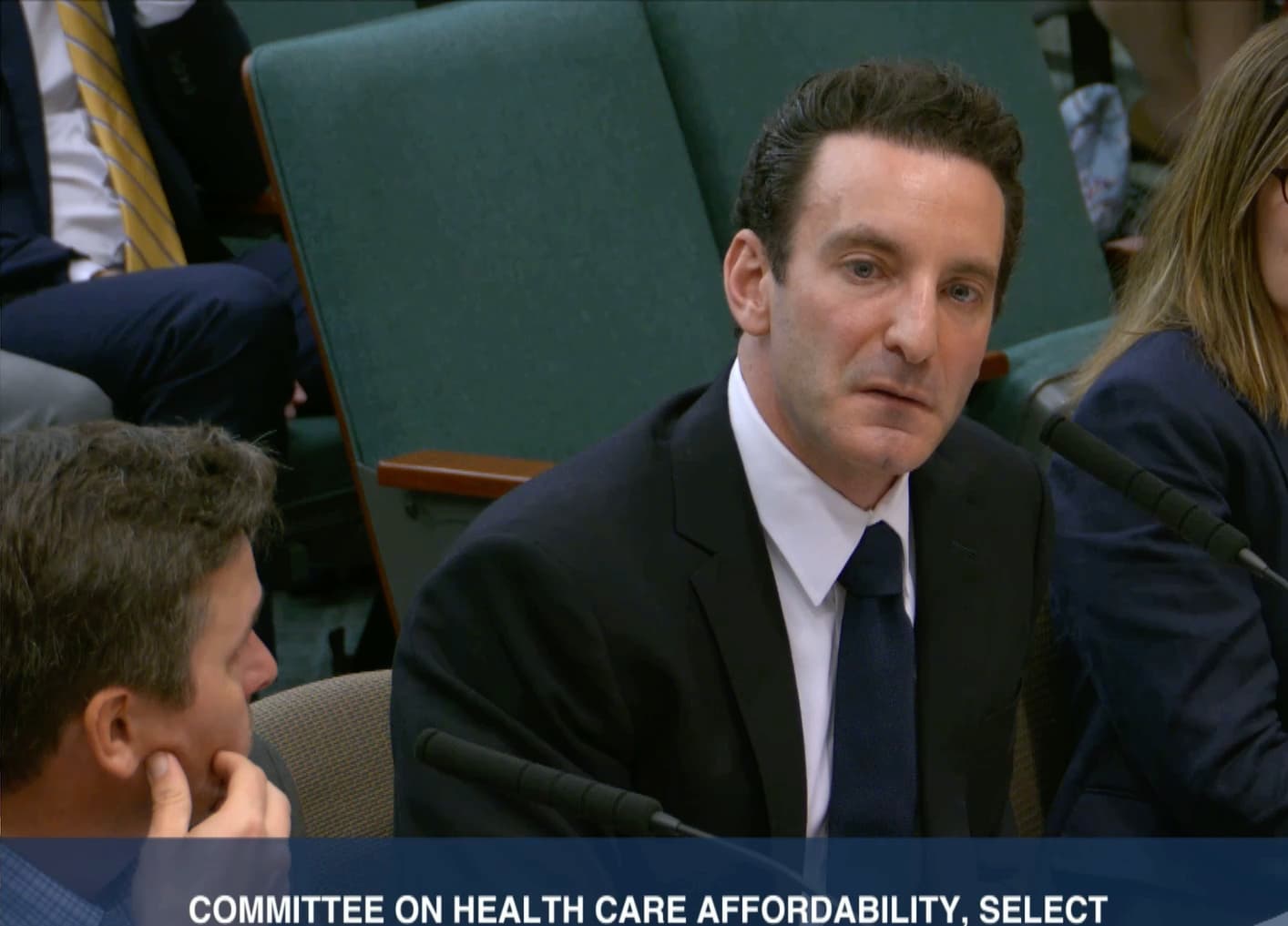
In March of this year, the House of Representatives in the state of Texas established a Select Committee on Health Care Affordability in order to conduct a comprehensive review of the factors driving health care costs in Texas and identify policy solutions to improve affordability while maintaining access to care.
This week, Professor Zack Cooper, director of the Health Care Affordability Lab at Yale, joined the committee in Austin to deliver testimony on his research and what we know about the drivers of rising health care spending. You can download and read the full testimony here or watch the testimony here.
In his testimony, Professor Cooper noted that about 42% of the health care dollars spent on the privately insured go toward hospital care. Since 2000, prices in the hospital sector have gone up more than prices in virtually any other sector of the economy. Hospital prices have grown three times faster than inflation, and at twice the rate of price growth for prescription drugs and doctor visits.
“The primary driver of the growth we’re seeing in hospital prices is the wave of hospital mergers in the U.S. over the last two decades,” Professor Cooper said in his testimony.
Professor Cooper said the best academic evidence suggests that hospital consolidation—particularly among hospitals that are close substitutes—raises health spending without meaningful improvements in clinical quality.
Professor Cooper’s own research shows that a dollar increase in hospital prices after a merger led to a dollar increase in insurance premiums. From there, increases in hospital prices and insurance premiums led to decreases in the payroll at firms outside the health care sector.
“When we zoomed out, we found that, after certain hospitals merged, we saw sizable increases in job losses in the surrounding counties and that these job losses were concentrated among workers earning less than $100,000 a year. So, in communities where a hospital merger meaningfully lessened competition, we found local residents lost $16 million in income and 110 jobs.”
In aggregate, after a hospital merger, each dollar increase in health care spending takes away approximately $1.33 from the rest of the economy, the research found.
“To sum up, if we want to address rising health insurance premiums, we’ve got to focus on addressing rising health care spending, and that means, chiefly, focusing on the pricing of hospital services.”
You can download and read his full testimony here.
More Commentary
.png)
Fixing Health Care’s Leaky Pipes: 1% Steps for Health Care Reform

To Constrain Soaring Health Insurance Premiums, We Must Constrain Growing Health Care Spending